The right window treatments can dramatically impact the look, comfort, and functionality of your home. Two of the most popular options homeowners consider are plantation shutters and blinds. While both provide privacy and light control, they differ in important ways—such as design, durability, customizability, and overall value. Understanding these key differences will help you confidently choose the option that best fits your home and lifestyle.
Understanding the Difference
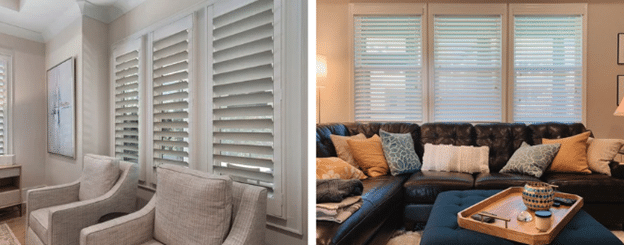
Plantation shutters are window coverings made from real hardwood, featuring wide, adjustable louvers built into solid panels. These panels are mounted on hinges to custom-built frames that attach directly to your existing window casing, creating a structured, built-in look. Because they are fitted and framed, plantation shutters feel more like a permanent part of the home than a decorative add-on.
Blinds, on the other hand, are slatted window coverings that hang from a headrail and can be raised and lowered by pulling a cord or by simply pulling and lifting the shades from the bottom if you choose a cordless control option. At Acadia Shutters, blinds are custom-sized to your windows and available in both faux wood and real wood. Their lighter weight and simpler construction generally make blinds less expensive, making them a more flexible and budget-conscious option for many homeowners.
Style and Customization
One of the biggest advantages of plantation shutters is the level of customization they offer. Shutters can be tailored down to nearly every detail, including louver size, panel configuration, divider rail placement, hinge finish, and color. Louvers are available in three different sizes, 2 ½”, 3 ½”, or 4 ½”, allowing homeowners to choose a more traditional look or a wider, more open feel. Shutters can also be custom painted to match your home’s trim color or finished in natural wood stains, allowing them to blend seamlessly into the home’s architecture. Shutters work well in standard openings as well as arches and other non-rectangular shapes.
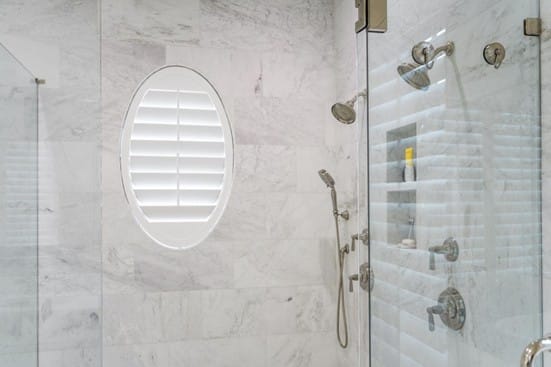
Specialty shutter covering this oval-shaped window in this Marietta, GA, customer’s shower.
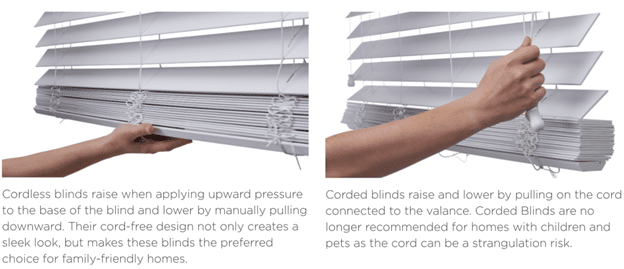
Real wood and faux wood blinds cannot be custom color matched like our plantation shutters, but they are available in a wide range of colors and finishes, with optional decorative tape to hide cords and add visual interest. Our blinds feature 2″ or 2½” slats and can be customized with either corded or cordless options that allow you to raise and lower the blinds. Cordless blinds are recommended for their safety and ease of use, while corded blinds are traditional and economical. A valance, a decorative top treatment that conceals the headrail, mounting brackets, and operating mechanisms of blinds, can be added for a more refined, finished appearance.
Light Control and Privacy
Both plantation shutters and blinds allow you to adjust light and privacy, but they perform differently. Plantation shutters fit tightly within the window opening, they limit unwanted light gaps around the edges of where the shutter panels attach to the window casing and provide consistent privacy throughout the day. Split tilt means the shutters are built with two independently operating sections—allowing the top louvers to be opened for light and views, while the bottom louvers remain closed for privacy.
Blinds provide good light control, but typically allow more light to pass through between slats and along the edges than you find with plantation shutters. This balance works well for spaces like kitchens, home offices, hallways, and laundry rooms where total light blockage isn’t a high priority.
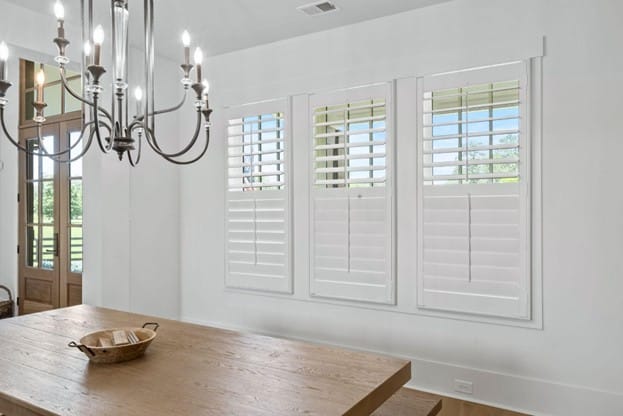
Plantation shutters with either a divider rail – as seen above – or a split tilt rod allow the top section of louvers to stay open while the lower section can be angled or closed for privacy.
Durability and Longevity
When it comes to long-term performance, plantation shutters have a clear advantage. Built from premium hardwoods and made to last for decades with proper care. Their solid construction holds up well to daily use, making them a popular choice for any room in the home.
Blinds are durable, but they generally have a shorter life expectancy than shutters. Over time, cords, slats, and mechanisms may show wear, especially in high-traffic areas. That said, blinds are easier to replace and update, which can be appealing if you anticipate changing styles down the road.
Maintenance and Care
Plantation shutters are straightforward to maintain. Their wide louvers make dusting quick and easy, and occasional wipe-downs help keep them looking and functioning like new. Because shutters don’t rely on cords or complex lift systems, there’s less that can wear out over time.
Read more about how to keep your plantation shutters clean and functioning properly.
Blinds require slightly more attention. Each slat needs to be cleaned individually, and cords and mechanisms may require occasional adjustment. Faux wood blinds are especially easy to clean and perform well in areas where humidity or moisture is a concern, while real wood blinds should be kept dry to maintain their finish.
Blinds require slightly more attention. Each slat needs to be cleaned individually, and cords and mechanisms may require occasional adjustment. Faux wood blinds are especially easy to clean and perform well in areas where humidity or moisture is a concern, while real wood blinds should be kept dry to maintain their finish.
Cost Considerations
Blinds typically cost less upfront, making them a strong option for homeowners who want quality window treatments while staying within a tighter budget. Faux wood blinds, in particular, offer durability and style at an accessible price point.
Plantation shutters require a higher initial investment. However, their longevity and timeless appeal often make them a better long-term value. Many homeowners view shutters as an investment in both daily comfort and the overall value of their home.
Which Is the Better Choice?
The better option depends on your priorities. Plantation shutters are ideal if you’re looking for a permanent, architectural solution with extensive customization, superior durability, and long-term value. Blinds are a great choice if you want flexibility, lower upfront cost, and a classic look that can easily adapt to changing styles.