Roman shades and roller shades are two of the most popular fabric window treatments, but they create different looks and function differently within a home. Roman shades add softness and visual interest through their folded fabric design, while roller shades offer a simple, streamlined appearance. The right choice depends on your design preferences, light-control needs, and how you want the shade to function day to day.
Roman Shades
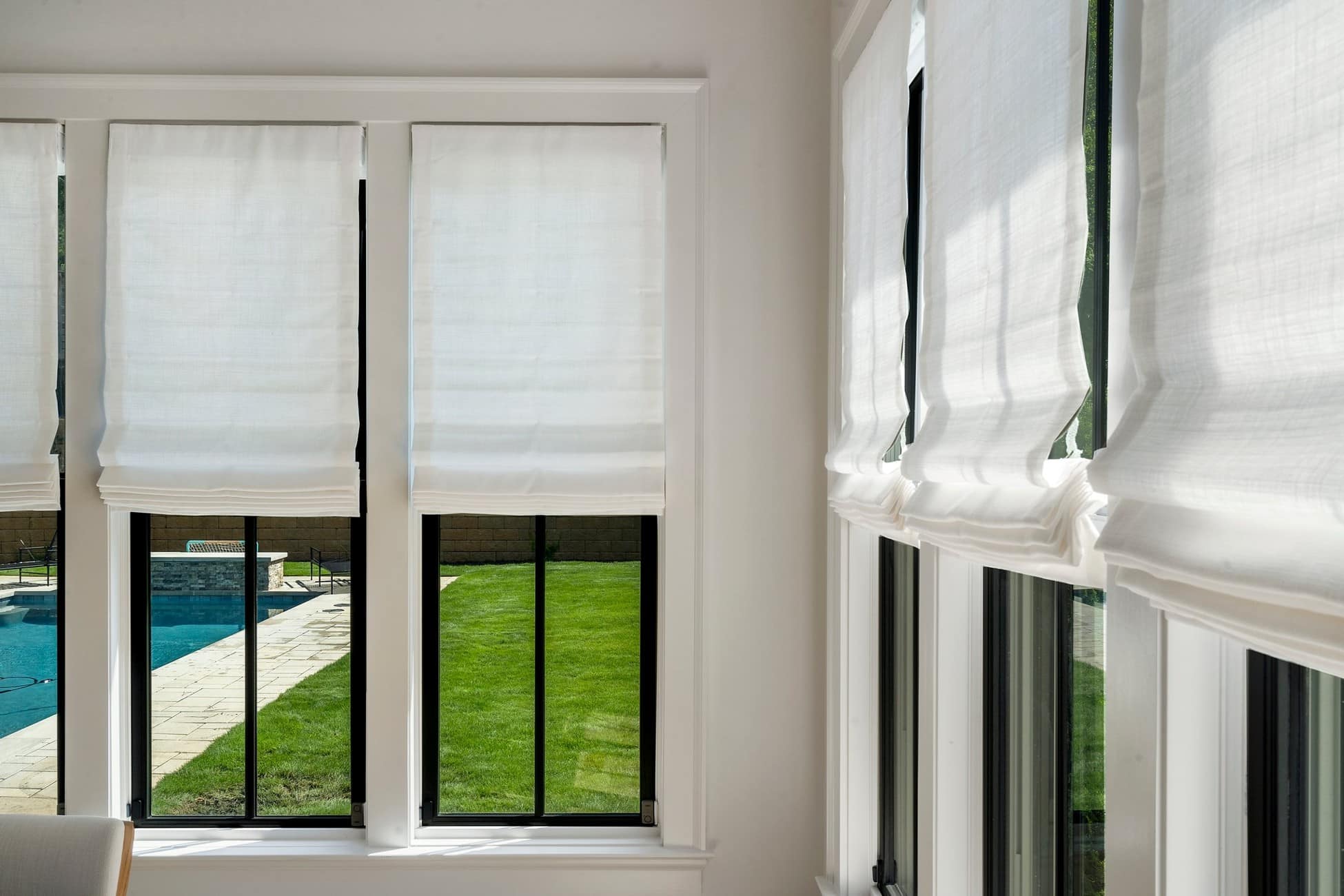
Roman shades are made from fabric that folds as it raises. When lowered, the fabric falls flat across the window. Looped and balloon styles are the exception (see image below). When a Roman shade is raised, the fabric stacks in overlapping folds at the top of the window. A portion of the top of the window remains covered even when the shade is fully raised. The amount of window cover depends on the window size and fabric thickness, but the stack can occupy several inches at the top of the window—and may cover approximately 10–15% of taller windows.
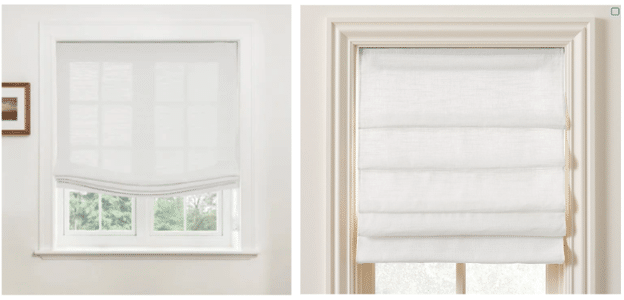
Looped shades (left) form gentle, relaxed curves along the bottom edge, while balloon shades (right) create fuller, more rounded billows for a softer, more traditional look.
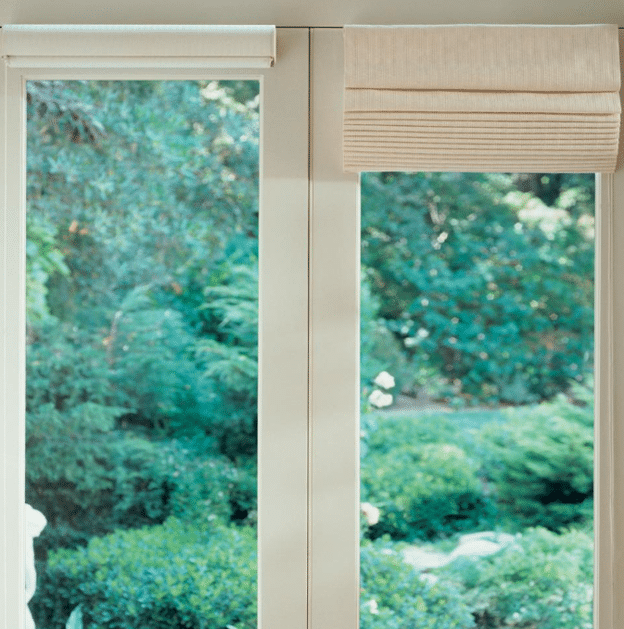
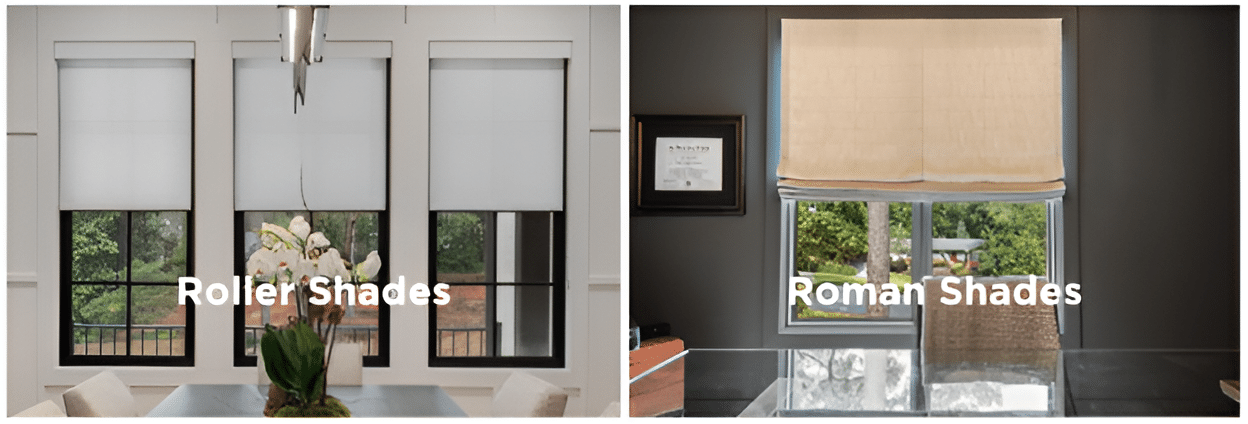
Roller shades (left) retract into the shade headrail, keeping more of your view visible. Roman shades (right) fold as they raise, creating a fabric stack at the top that covers part of your window even when fully raised.
Most Roman shades are made from decorative woven fabrics such as cotton, linen, and polyester. Cotton and linen are popular for their soft texture, natural translucence, and ability to create a warm, inviting look, while polyester adds durability, wrinkle resistance, and long-term color stability. Some fabrics may also include rayon or viscose fibers, which allow the shade to hang and fold more smoothly for a softer, more refined appearance. When sunlight passes through these fabrics, it is softened and diffused, similar to light shining through a piece of clothing or a sheer gown. The fabric gently filters the light, creating a comfortable glow while reducing glare. The exact effect depends on the fabric’s weave, color, and liner selection.
The fabric and liner work together to determine how much light enters the room. A privacy liner diffuses incoming sunlight, reducing glare while allowing a soft, filtered glow to pass through the fabric. A blackout liner is designed to block most incoming light and increase privacy. However, because Roman shades are mounted inside the window frame and the fabric sits within the opening, small gaps along the sides can still allow some light to enter the room.
Roman shades are most often installed inside the window casing so the decorative trim around the window remains visible. This type of mount works best when the window opening has enough depth—typically 1.5 to 4 inches—for the shade to sit neatly within the frame. In situations where you may want to give a more dramatic, taller look, an outside mount can be used to extend the shade beyond the window opening and reduce light gaps.
Roman shades can be operated using cordless, corded, or motorized lift systems. Cordless operation provides a clean appearance and works well for most standard windows. Corded systems are often used on larger or heavier shades where more controlled movement is preferred. Motorized shades are ideal for hard-to-reach windows and can be raised or lowered using a remote control, smartphone app, or smart home integration. Many motorized systems can also be programmed to open and close on a schedule throughout the day.
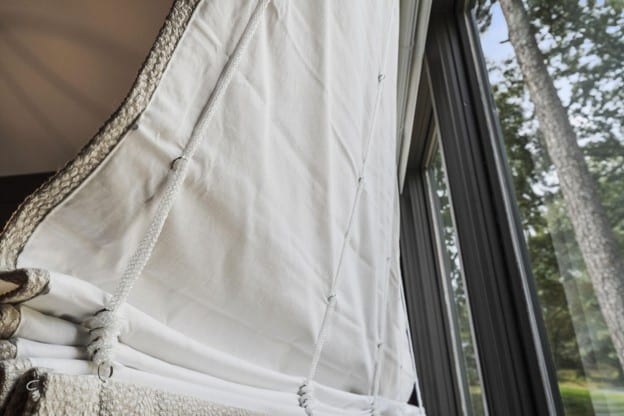
A white privacy liner softens incoming light while maintaining privacy—an understated detail that makes the home office feel more comfortable and controlled throughout the day.
Roller Shades
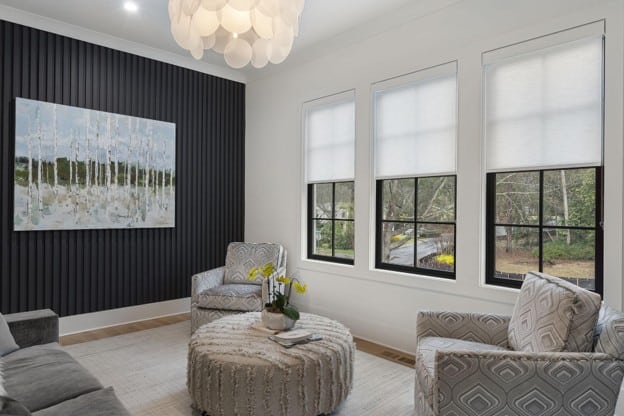
Roller shades feature a single piece of fabric that rolls neatly around a tube at the top of the window. When raised, the fabric disappears into a compact roll, leaving most of the glass uncovered. Because of this low-profile design, roller shades are one of the best options for maximizing both natural light and your view when the shade is raised.
Their slim profile allows roller shades to sit close to the window, making them a great choice for shallow window casings, contemporary spaces, and larger windows where bulkier treatments may feel overwhelming. The shade material is typically made from a blend of polyester, PVC, and vinyl. Polyester provides strength, durability, and color stability, while PVC and vinyl help the fabric maintain its shape, improve light control, and increase resistance to moisture, fading, and everyday wear. These materials also allow roller shade fabrics to be manufactured with varying levels of openness and opacity, giving homeowners greater flexibility in balancing light, privacy, and visibility. The fabric you choose determines how much light enters the room. Sheer and solar fabrics help reduce glare while preserving the view to the outdoors, light-filtering fabrics soften incoming light and provide privacy, and blackout fabrics offer the greatest level of light control.
When sunlight passes through sheer, solar, or light-filtering roller shade fabrics, it is softened and diffused throughout the room rather than entering as direct glare. Similar to light passing through a finely woven textile, the fabric helps create a more comfortable and evenly lit space while reducing harsh sunlight. The exact effect depends on the fabric’s openness factor, color, and material composition. Blackout fabrics are designed to block nearly all light from passing through the shade material itself.
Roller shades can be mounted inside or outside the window opening. An inside mount creates a clean, built-in appearance within the window casing An outside mount extends beyond the window opening, helping to minimize light gaps and improve privacy and room-darkening performance.
For operation, roller shades are available with cordless, continuous cord loop, or motorized lift systems. Cordless shades are raised and lowered with a simple push or pull, making them easy to use and child-safe. Continuous cord loops provide smooth operation for larger or heavier shades, while motorization offers the ultimate convenience, allowing shades to be adjusted with a remote, smartphone app, voice command, or automated schedule.
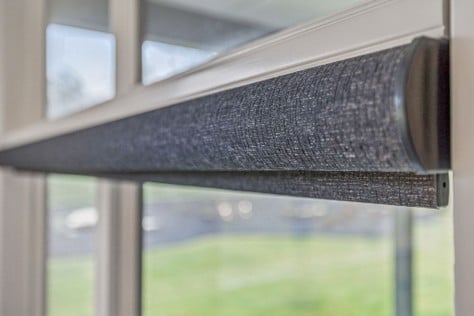
An inside-mounted roller shade sits neatly within the window frame, keeping the profile clean while filtering light when lowered and preserving the view when raised.
Visual Impact and Room Design
Roman shades act as a design element within the room. The fabric, folds, and overall structure introduce texture and make the window feel more finished.
Roller shades are simpler and more modern. They present a flat surface when lowered and largely disappear when raised, keeping the focus on the surrounding space rather than the window itself.
If a space feels too minimal or needs warmth, Roman shades add visual depth and dimension If a room already has strong design elements, roller shades help maintain balance by staying understated.
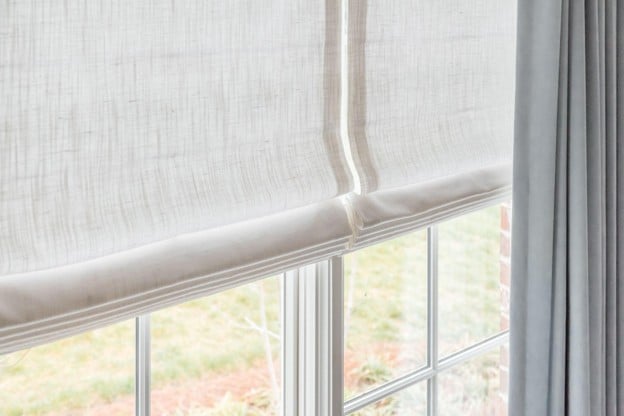
Roman shades paired with drapery add depth at the window—soft fabric folds in front, with panels that frame the space and provide added light control when needed.
Which One Makes More Sense
The decision between Roman shades and roller shades comes down to how much visual presence you want the window treatment to have and how you expect it to function. Roman shades are a statement design element, with visible folds and fabric that add softness and texture to the room. Roller shades keep the focus on the window itself, with a lower-profile design that disappears more completely when raised. Both can provide excellent light control and privacy, but they achieve it in different ways.
In many cases, the decision is not strictly one or the other, but a balance between design preference, light control expectations, and how the shade will operate within the space.