Choosing the right window treatment starts with understanding the strengths of each option. Shutters, shades, blinds, and drapery all offer different benefits—from light control to privacy to style—so knowing what each one does best makes it easier to select the right fit for your home.
Plantation Shutters
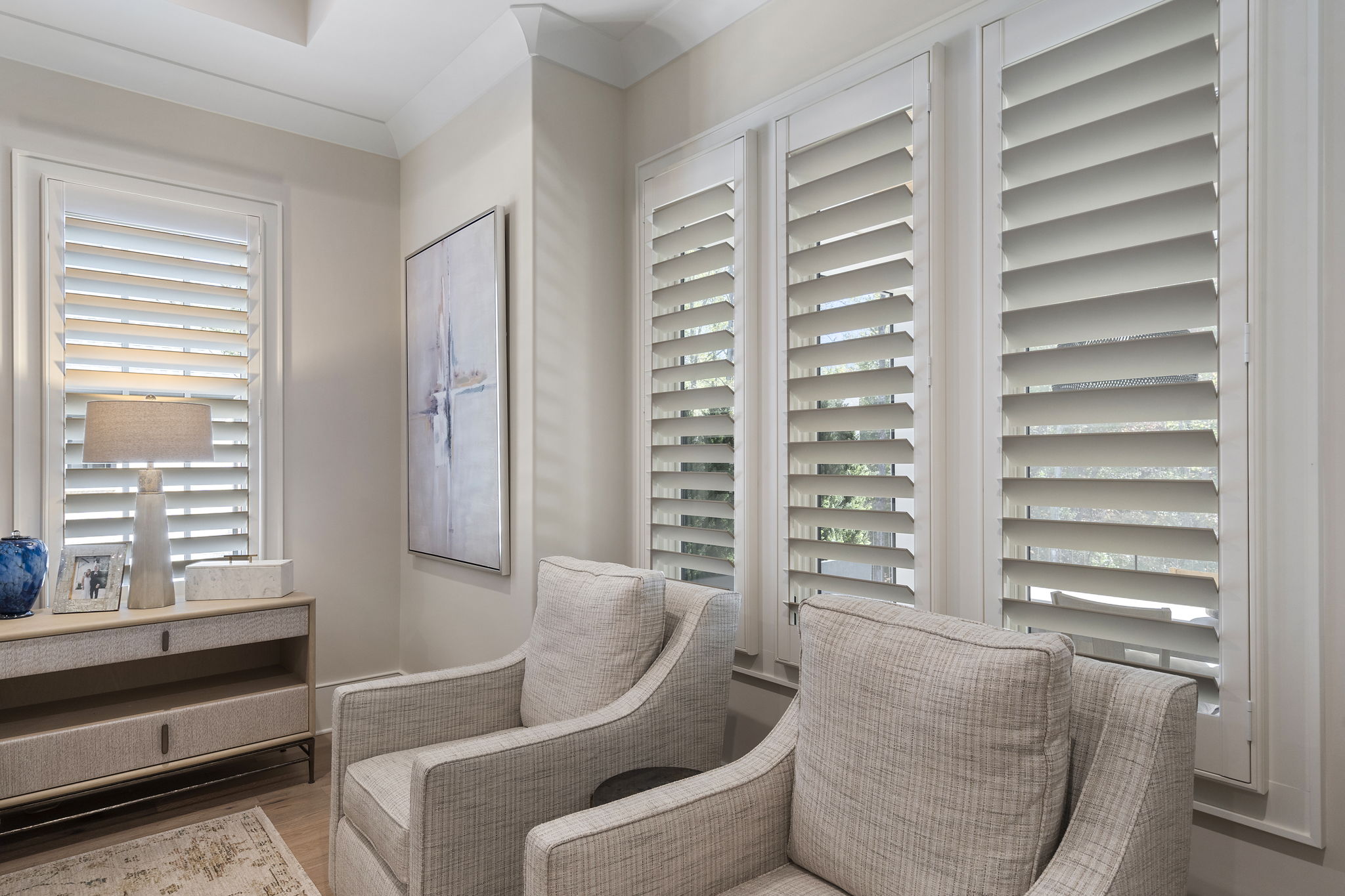
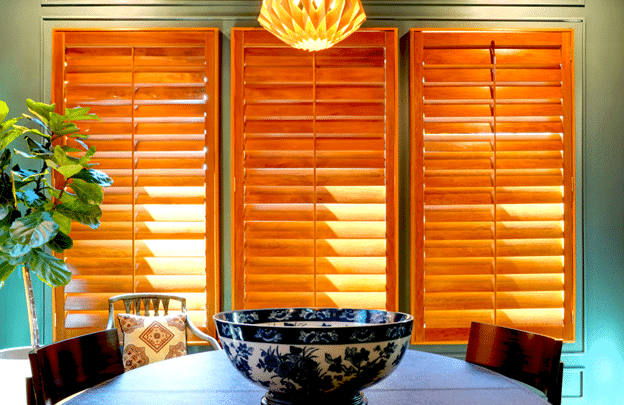
Plantation shutters stand out as one of the most popular window treatments thanks to their versatility and extensive customization options. They are the only window treatment that can be custom painted to match your existing trim or finished in rich natural wood stains, allowing them to blend seamlessly with your home’s architecture. Because shutters are mounted directly to the window casing, they create a furniture-like presence that feels substantial. They are the most durable window treatment option available, holding up well in high-traffic areas and throughout years of daily use.
Adjustable louvers provide exceptional control over light and privacy, allowing you to fine-tune brightness throughout the day. Louvers can be tilted open to welcome natural light or closed tightly for privacy. Louver size can be customized to achieve the look you are seeking—smaller louvers create a more traditional appearance, while wider louvers offer a more open view and a clean, contemporary presence that highlights natural light.
The width of plantation shutters can be customized so that either one wide panel or two narrower panels cover each window. A single wide panel covering a window maximizes light and view but requires more space to swing open. A two-panel configuration divides the opening into two narrower panels that meet in the center. Each panel is lighter and easier to fold back against the wall, though, when the panels are closed, your view will be partially obstructed where the 2 panels touch in the center of the window.
Shutters can also be mounted either inside or outside the window casing. Inside mount shutters sit close to the window and offer a slim profile, but may block windows from tilting in. Outside mount shutters preserve a window’s tilt in feature and are necessary when the shutters’ louvers require more clearance from the windows to operate.
Natural Woven Shades
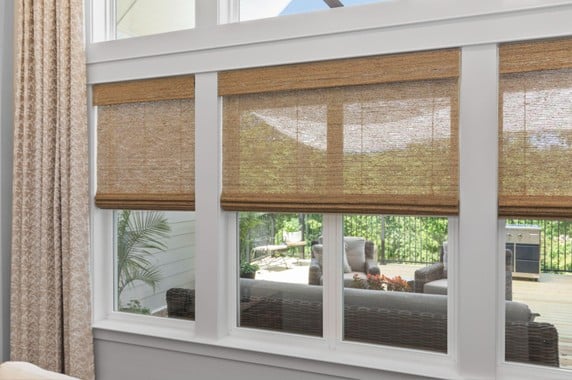
Natural woven shades are crafted from organic materials such as bamboo, reeds, grasses, and natural fibers. Subtle variations in weave and color add warmth, texture, and visual depth, giving windows a relaxed, organic look.
Beyond their aesthetic appeal, woven shades offer versatile performance. Their open weaves gently filter sunlight, reducing glare while still allowing daylight to pass through. For added functionality, optional liners—ranging from privacy to blackout—can be added to improve light control, enhance privacy, and increase energy efficiency without sacrificing the natural look of the shade.
Many woven shades are available in cordless or motorized options. By eliminating dangling cords, these styles are easier to operate and create a cleaner, more streamlined appearance, while also improving safety for homes with children or pets.
Natural woven shades also pair beautifully with drapery, adding dimension and softness to a space. Together, they create a warm, approachable look that feels both comfortable and effortlessly stylish.
Roller Shades
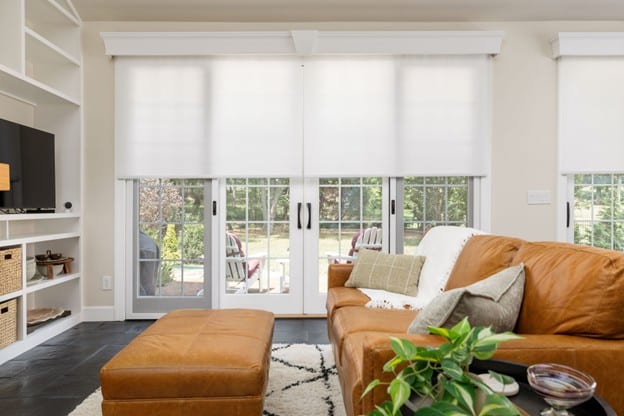
Roller shades are streamlined, single-panel fabric shades that roll smoothly up and down. Their low-profile design means the shade sits close to the window with minimal hardware, creating a clean, modern look that works across a wide range of interiors. When raised, the shade disappears neatly into a slim **valance—a fabric- or wood-covered header that conceals the roller and mounting hardware—**leaving the window largely unobstructed and ideal for showcasing views and architectural details.
Roller shades are available in a wide selection of fabrics that range from high opacity to low opacity. Light-filtering fabrics soften daylight while maintaining a bright feel, privacy fabrics limit visibility while still allowing light in, and blackout fabrics block light almost entirely—making them suitable for everything from living spaces to bedrooms and media rooms.
Roller shades offer smooth functionality, a minimalist aesthetic, and excellent value—making them a practical choice for both everyday living and large or wide windows where heavier treatments may feel bulky.
Roman Shades
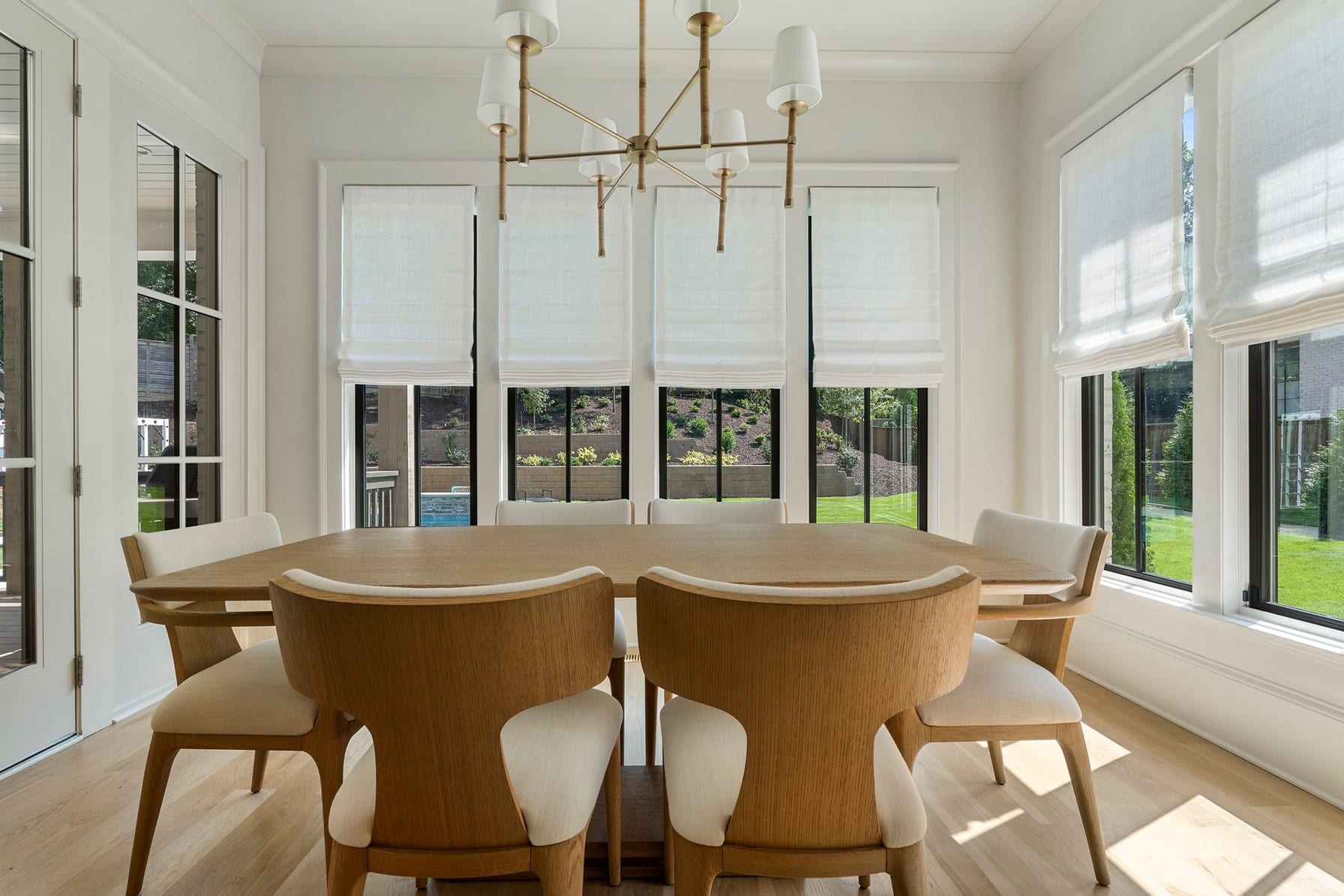
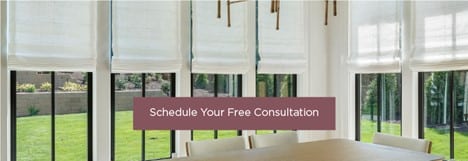
Roman shades combine the softness of drapery with the functionality of a shade, folding into tailored horizontal pleats when raised. Their fabric-forward design allows them to function as both a practical window covering and a decorative design element.
With an extensive range of fabrics, textures, patterns, and linings available, Roman shades can be customized to suit virtually any room. Light-filtering fabrics soften daylight, while privacy and blackout linings provide greater control for bedrooms and media spaces. When lowered, Roman shades create a tailored, fabric-forward look; when raised, they stack neatly, preserving views and natural light.
Roman shades also layer beautifully with drapery or stand confidently on their own, making them a versatile option for dining rooms, living spaces, and bedrooms where you want a refined, finished look that feels inviting rather than rigid.
Drapery (Curtains & Drapes)
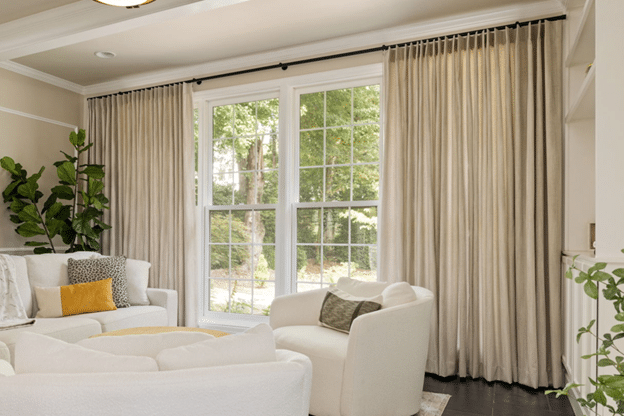
Drapery is made up of fabric panels hung from decorative rods or discreet tracks, extending beyond the window frame to add softness, scale, and visual structure to a room. Highly customizable, drapery can be tailored through fabric choice, pleat style, panel length, lining, and hardware to suit both the architecture of the home and the function of the space.
In addition to their visual impact, drapery panels provide practical benefits as well. Panels can be lined with a fabric backing to improve light control, enhance privacy, and help them hang more smoothly. For added performance, interlining introduces an extra layer between the fabric and lining, which increases fullness, improves insulation, reduces glare, and helps soften acoustics—especially in larger or open-concept rooms. Blackout linings are ideal for bedrooms, while lighter linings allow daylight to filter through without harsh brightness.
Drapery also plays a key role in framing windows, making ceilings feel taller and rooms more complete. Whether used alone or layered over shades or shutters, drapery adds depth and a designer-level finish that elevates the entire space.
Cellular Shades
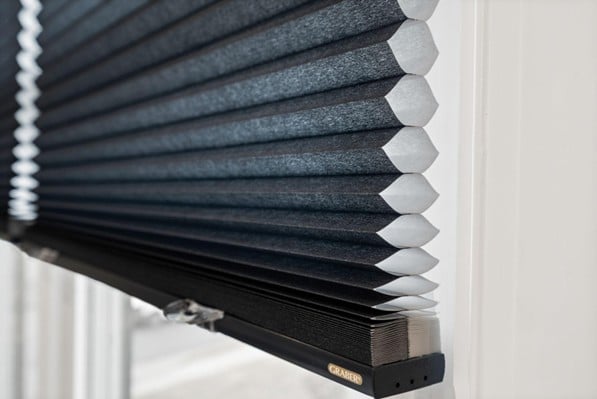
Cellular shades are made with pleated fabric that forms built-in air pockets—called cells—that trap air at the window. This added insulation helps keep rooms warmer in winter and cooler in summer, making cellular shades one of the most energy-efficient window treatments available and helping reduce heating and cooling costs year-round.
They also offer versatile, room-by-room light control. Available in sheer, light-filtering, privacy, and blackout fabrics, cellular shades let homeowners choose exactly how much light and privacy they want in each space. Options like top-down/bottom-up operation allow natural light to enter from the top of the window while maintaining privacy below—ideal for bedrooms, bathrooms, and street-facing rooms.
When raised, cellular shades stack neatly with a slim profile, keeping the window visually open. Cordless and motorized options make them easy to use, safer for homes with children and pets, and especially convenient for large or hard-to-reach windows. The result is a clean, comfortable solution that balances performance, safety, and understated style.
Wood & Faux-Wood Blinds
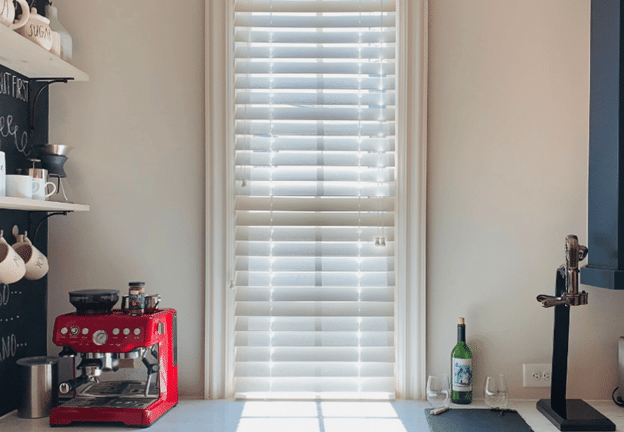
Wood and faux-wood blinds feature horizontal slats that tilt open and closed, offering precise control over light direction and privacy. Real wood blinds bring warmth, richness, and natural variation to a room, making them a strong choice for traditional, craftsman, or transitional interiors.
Faux-wood blinds provide the same visual appeal with added durability. Made from PVC, they resist moisture, warping, and fading—making them especially well-suited for kitchens, bathrooms, laundry rooms, and other high-humidity areas. Both options are easy to operate, simple to maintain, and available in a range of finishes that coordinate with trim and flooring.
Faux-wood blinds are the least expensive window treatment option, while offering dependable performance and adjustable light control in spaces where flexibility and durability are key.
Choosing window treatments is about balancing style, function, and how your home works as a whole. Rather than thinking about each room in isolation, many homeowners focus on creating a cohesive look throughout the home and then fine-tune details—like light control, privacy, or durability—where it matters most.