Plantation shutters are among the most popular custom window treatments for homeowners, valued for their timeless style and clean, high-end appearance. When selecting shutters for your home, one of the key decisions is choosing the material: real wood or faux wood.
Both options can enhance the look of a space, but they differ in performance and versatility. Real wood shutters provide a more tailored, built-in feel, offering superior strength that supports wider panels and accommodates a variety of window shapes. Faux wood shutters, while often a practical choice for certain environments, typically offer less flexibility in design and may not match the same level of durability
At Acadia Shutters, we offer both options. But when customers ask which material delivers the best performance, appearance, and long-term value, real wood almost always rises to the top.
The Advantage of Real Wood Construction
Our real wood plantation shutters are crafted from premium hardwoods that can be milled with exceptional precision, creating a look that feels architectural and built-in.
Wood’s natural strength and rigidity makes it possible to build shutter panels up to 36” wide. This means that wood shutters can be built to cover a window with a single panel rather than two panels. Many homeowners prefer the minimalist and elegant appearance of a single panel covering each window. Faux wood panels cannot be built as wide as real wood panels. Wide faux wood louvers sag over time due to the material’s weight. When louvers sag, they become difficult to open and close, impacting both function and longevity.
Homes sometimes feature arched openings as well as other non-rectangular shaped windows. Real wood can be custom crafted to fit these windows. By contrast, faux wood shutters are typically limited to only rectangular shapes.
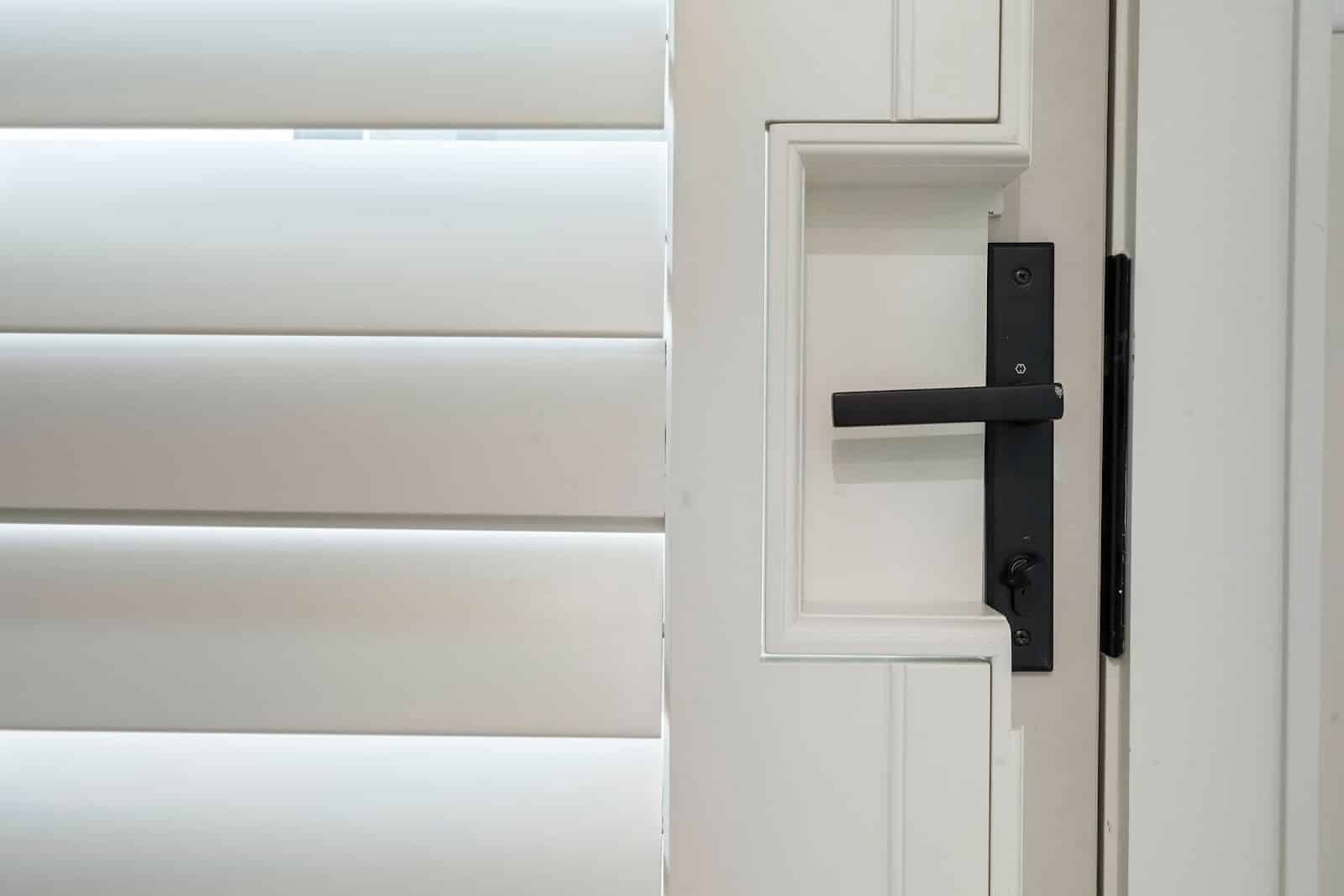
Custom real wood shutters, precision-cut to fit seamlessly around the door lever in this Atlanta home.
Custom Colors & Finishes
One of the biggest advantages of real wood plantation shutters is that they can be painted any color. Wood accepts paint and stain evenly, producing a smooth, consistent finish, making it ideal for homeowners who want shutters to seamlessly match the color of any casing around their windows.
Our real wood shutters can be finished in your choice of one of 35 standard paint colors or one of our 11 rich wood stains or custom-color matched to your home’s trim or paint at no additional cost. Before production begins, you’ll approve a physical color sample to ensure the finish is exactly right. Because wood takes paint and stain so well, the final result is durable, consistent, and resistant to yellowing over time.
Faux wood shutters are manufactured and produced in predetermined colors during the material extrusion process. For instance, we offer 4 color options. The limited color selection of faux wood shutters can make it more difficult to achieve an exact match to existing window trim, and subtle differences in tone may become more noticeable over time as surrounding materials age.
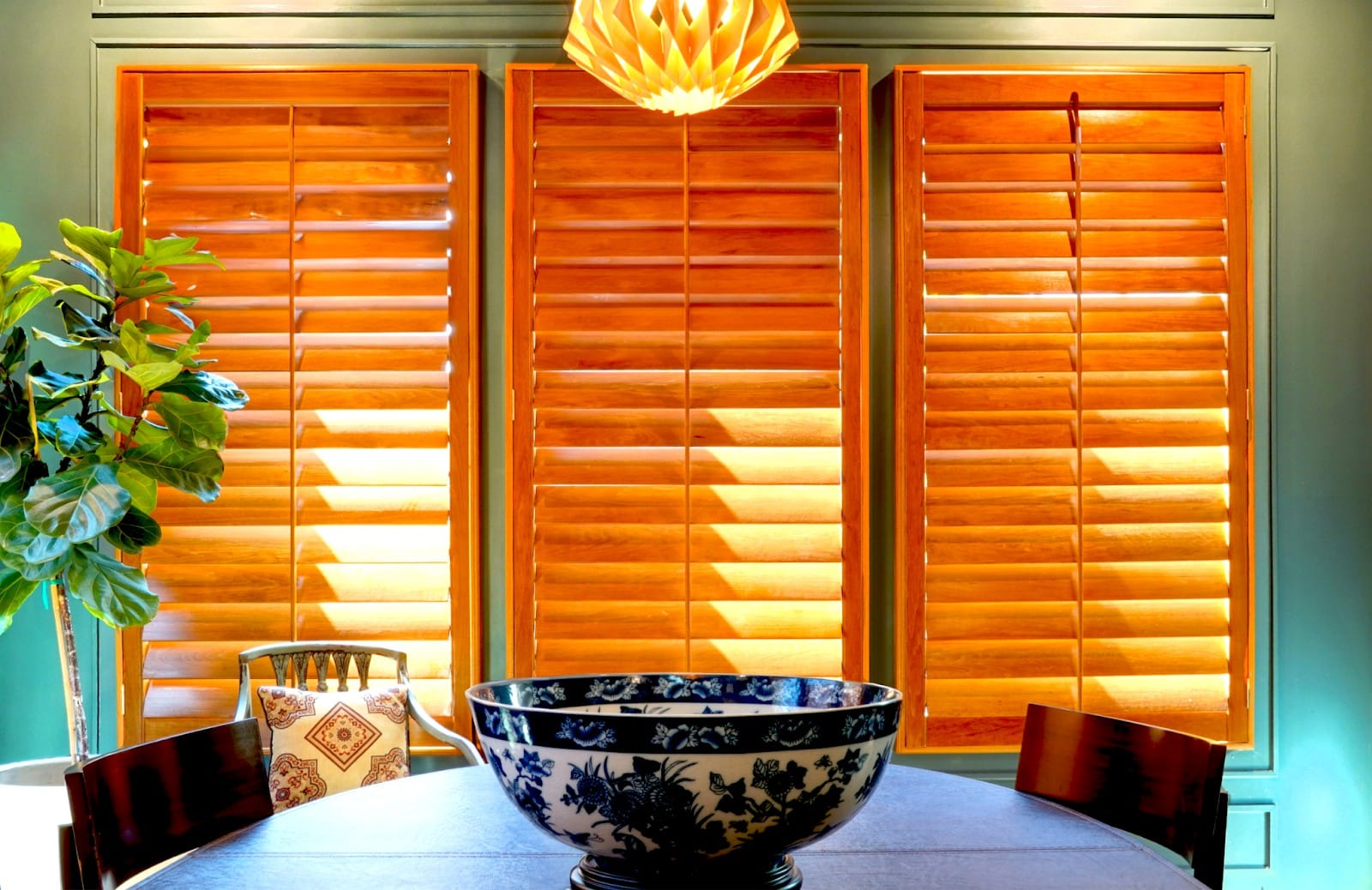
Stained real wood shutters in this Nashville, TN home highlight the natural grain and rich wood tones.
Long-Term Durability That Protects Your Investment
While faux wood is often marketed as “more durable,” durability isn’t just about resisting moisture—it’s also about how a shutter performs over time. Faux wood shutters are significantly heavier. Over the years, that weight can lead to sagging panels and stress on hinges that can affect how the shutters operate.
High-quality real wood shutters, when properly crafted and installed, remain straight, stable, and smooth-operating for decades.
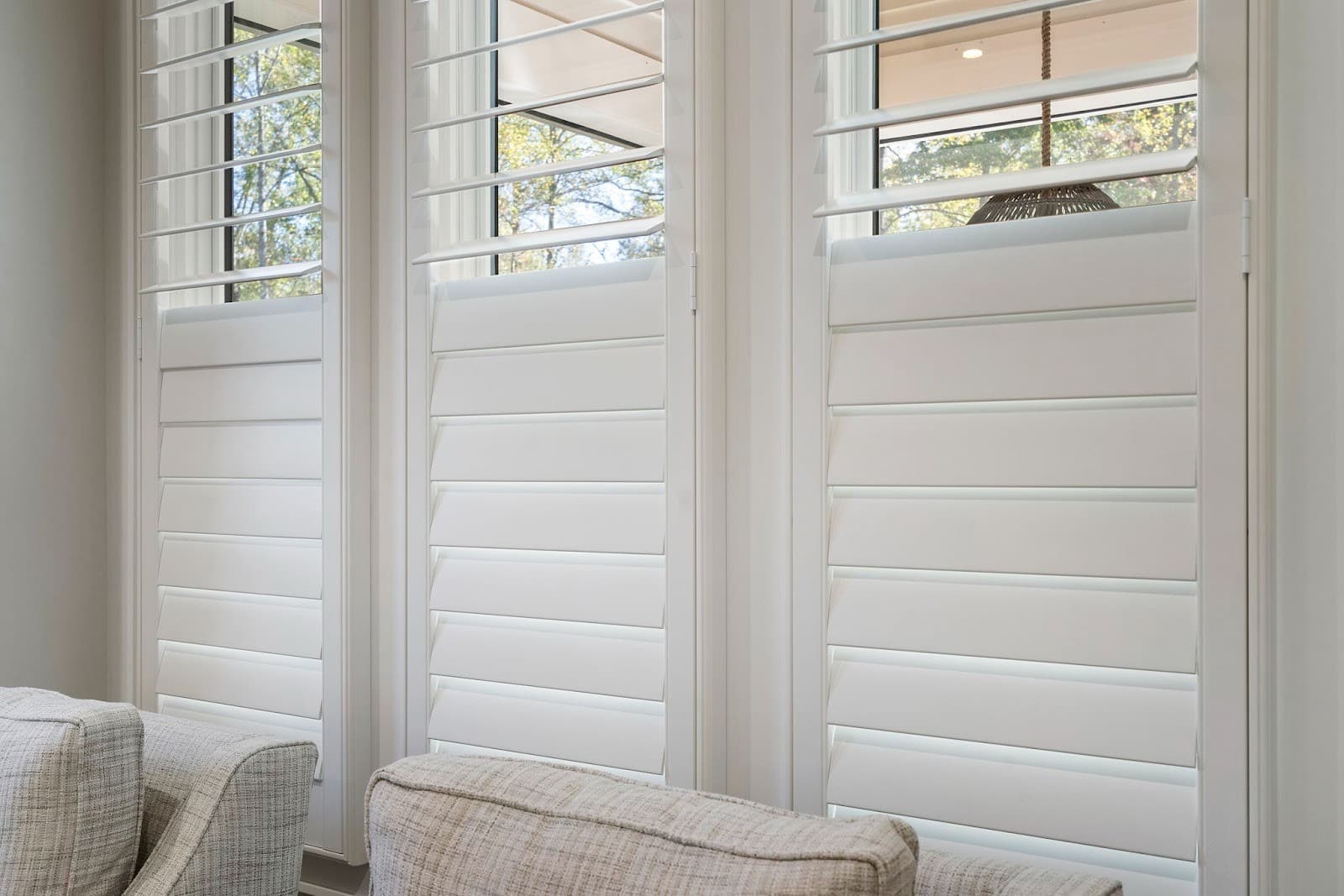
Real wood shutters color-matched to the trim and wall tones, create a seamless, built-in look in this Atlanta home office.
What “Faux Wood” Really Means—and Why It Matters
One of the challenges with faux wood shutters is that “faux” isn’t a single, consistent material. It’s a general term that can refer to a wide range of materials—everything from MDF (medium-density fiberboard) and particle board to hollow plastics or various grades of PVC. These materials may look similar on the surface, but they perform very differently over time.
Unlike real wood, faux wood products aren’t standardized across manufacturers. Because formulas and production methods can change over time, the product you see today may not match what was installed years earlier. Many faux wood shutters are also produced overseas, where materials and manufacturing standards can vary from one supplier to the next. By contrast, real wood shutters are made of premium hardwood, a natural, sustainable material that has been consistently manufactured in the same facility for over 20 years.
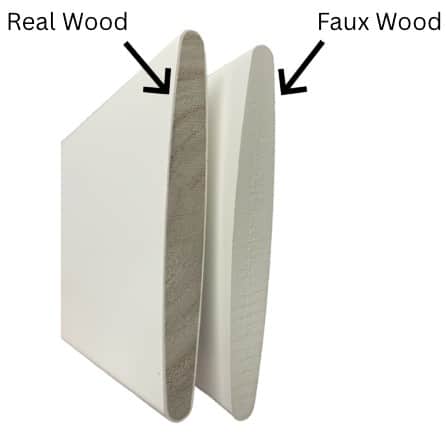
While faux wood can vary widely in composition, real wood offers a consistent, natural material you can rely on over time.
A Common Misconception About Real Wood
Our sales consultants are often asked whether faux wood shutters are the better choice for bathrooms, garages, or other high-moisture areas. Many homeowners assume that real wood won’t hold up in these environments—but that’s a common misconception.
In reality, properly finished real wood performs very well in spaces like bathrooms. A helpful comparison is the painted wood trim, vanities, and cabinetry already found in most homes. These elements are regularly exposed to humidity and temperature changes, yet they hold up beautifully over time.
A Familiar Comparison
A helpful way to think about the difference between real wood and faux shutters is to compare furniture. A solid hardwood table—glued, joined, and built for decades of use—will always feel sturdier and age better than a plastic alternative. The same principle applies to plantation shutters.
Real wood maintains its shape, and resists long-term sagging. Faux materials may perform well initially, but over time, weight, heat exposure, and material fatigue can cause sagging. Prolonged exposure to sunlight can also cause faux wood to gradually yellow—similar to how white PVC trim or plastic outdoor furniture can discolor with UV exposure—changing the look of the shutters over time.
The Cost Difference
One of the biggest misconceptions about plantation shutters is that real wood costs dramatically more than faux wood. In the broader market, that’s often true—real wood shutters are typically priced at a noticeable premium. However, that gap isn’t always as large as many expect. In fact, our real wood shutters cost only about 4% more than faux wood.
What It Comes Down To
Our role isn’t to push one material universally—it’s to recommend the best option for your home, your windows, and how you live in space. Whether you choose real wood or faux wood, you’ll receive shutters designed specifically for your home, needs and preferences—but for most homeowners, real wood delivers the best balance of beauty, performance, and long-term value.